

Introduction
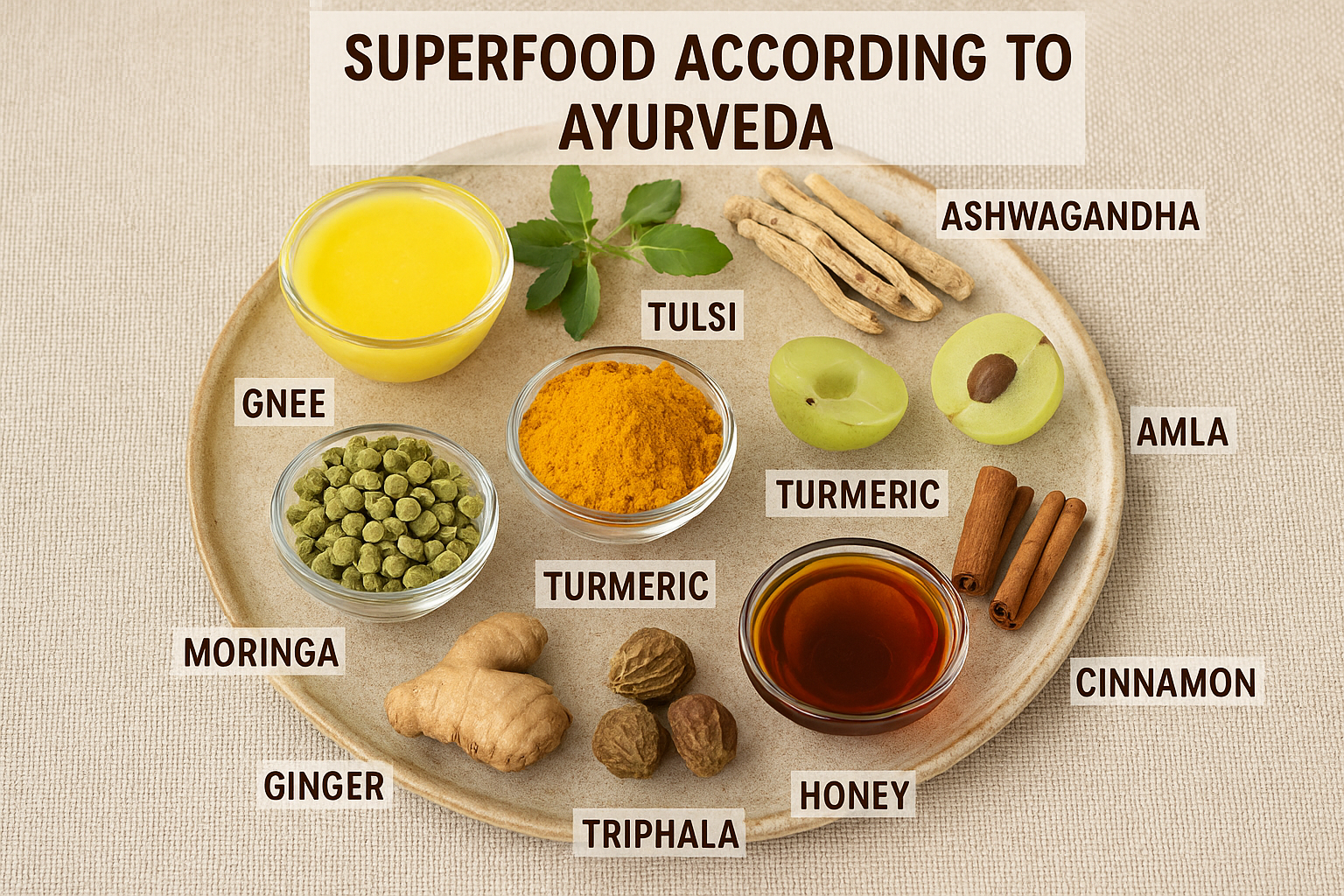
In a world full of trendy diets and nutrition fads, Ayurveda—India’s 5,000-year-old holistic health system—offers timeless wisdom about food and wellbeing. According to Ayurveda, food is not just fuel; it’s medicine. Every bite we eat affects our body, mind, and energy. While the modern world talks about “superfoods,” Ayurveda has long identified natural ingredients that balance the body’s energies, support immunity, improve digestion, and promote longevity.
Let’s explore some of the most powerful Ayurvedic superfoods that you can incorporate into your daily routine to experience better health the natural way.
1. Amla (Indian Gooseberry)
One of the most revered superfoods in Ayurveda, Amla is rich in Vitamin C and antioxidants.
-
Benefits: Boosts immunity, improves skin health, supports digestion, balances all three doshas (Vata, Pitta, Kapha).
-
How to Use: Fresh amla juice, dried amla powder with honey, or in the form of chyawanprash.
Ayurvedic Insight: Amla is known as a “Rasayana” – a rejuvenator that promotes vitality and longevity.
2. Turmeric (Haldi)
Called the “Golden Spice,” turmeric is a powerful anti-inflammatory and antioxidant root.
-
Benefits: Heals wounds, improves joint health, supports liver function, and strengthens the immune system.
-
How to Use: Add it to milk (golden milk), curries, or take turmeric capsules with black pepper for better absorption.
3. Ghee (Clarified Butter)
Ghee is more than a cooking fat in Ayurveda—it’s considered sacred and medicinal.
-
Benefits: Enhances digestion, lubricates joints, nourishes tissues, sharpens the mind.
-
How to Use: Cook with it, spread on chapatis, or consume a teaspoon in warm water during detox.
4. Ashwagandha (Indian Ginseng)
A powerful adaptogen, Ashwagandha helps the body manage stress and increase stamina.
-
Benefits: Reduces anxiety, boosts energy, improves sleep, supports thyroid and reproductive health.
-
How to Use: Mix the powder with warm milk or take in capsule form.
5. Moringa (Drumstick Tree Leaves)
Moringa is known as the “miracle tree” and is highly valued in both modern nutrition and Ayurveda.
-
Benefits: Rich in iron, calcium, vitamins A and C, supports detoxification and hormone balance.
-
How to Use: Add fresh moringa leaves to curries or smoothies, or use dried powder in soups.
6. Triphala
This classic Ayurvedic blend of Amla, Haritaki, and Bibhitaki is a powerful digestive and detoxifying formula.
-
Benefits: Supports gut health, improves digestion, relieves constipation, strengthens immunity.
-
How to Use: Take Triphala powder with warm water before bed or in capsule form.
7. Tulsi (Holy Basil)
Revered as a sacred plant, Tulsi is a powerful herb for respiratory, immune, and mental health.
-
Benefits: Fights infections, clears sinuses, calms the mind, supports heart health.
-
How to Use: Fresh leaves in tea, dried tulsi powder, or herbal capsules.
8. Dates (Khajur)
Sweet, warm, and nourishing, dates are a grounding food ideal for strength and recovery.
-
Benefits: Provide instant energy, improve hemoglobin levels, support reproductive and bone health.
-
How to Use: Eat soaked dates in the morning or blend into smoothies and shakes.
9. Cumin, Coriander & Fennel (CCF)
This trio of digestive spices is a staple in Ayurvedic detox and digestion routines.
-
Benefits: Reduces bloating, supports metabolism, cleanses the urinary tract.
-
How to Use: Boil a teaspoon of each in water for 10 minutes to make a daily detox tea.
10. Honey (Madhu)
In Ayurveda, raw honey is known as Yogavahi—a substance that enhances the properties of other ingredients.
-
Benefits: Natural cough remedy, energy booster, supports skin health and wound healing.
-
How to Use: Mix with warm water, herbal powders, or lemon (never heat honey directly).
Conclusion
Ayurvedic superfoods are more than just “healthy” ingredients—they’re sacred, healing, and deeply connected to our individual body constitutions (doshas). By choosing the right foods according to your dosha, season, and digestion, you can restore balance, vitality, and harmony in your body and mind.
Rather than chasing the next trendy “superfood,” look back at what ancient wisdom has always known: nature already provides everything we need to heal.
“Let food be thy medicine, and medicine be thy food.” – Hippocrates (and every Ayurvedic sage ever